Biography
About Lord Sahota
Lord Sahota, Baron Sahota of Telford in the County of Shropshire, is a Labour member of the House of Lords, created a life peer in November 2022 following his inclusion in the 2022 Special Honours list.
Born in India in 1951, he came to England in 1966 and spent fifteen years working at the GKN Sankey factory in Telford, where he became active in trade unionism.
Lord Sahota built a long career in local government, serving as a Labour councillor for Malinslee and Dawley Bank on Telford and Wrekin Council from 2001 to 2023, including a period as council leader from 2011 to 2016.
Lord Sahota's career reflects a sustained commitment to public service, from grassroots trade unionism through decades of local leadership to his appointment to the House of Lords.
In Parliament
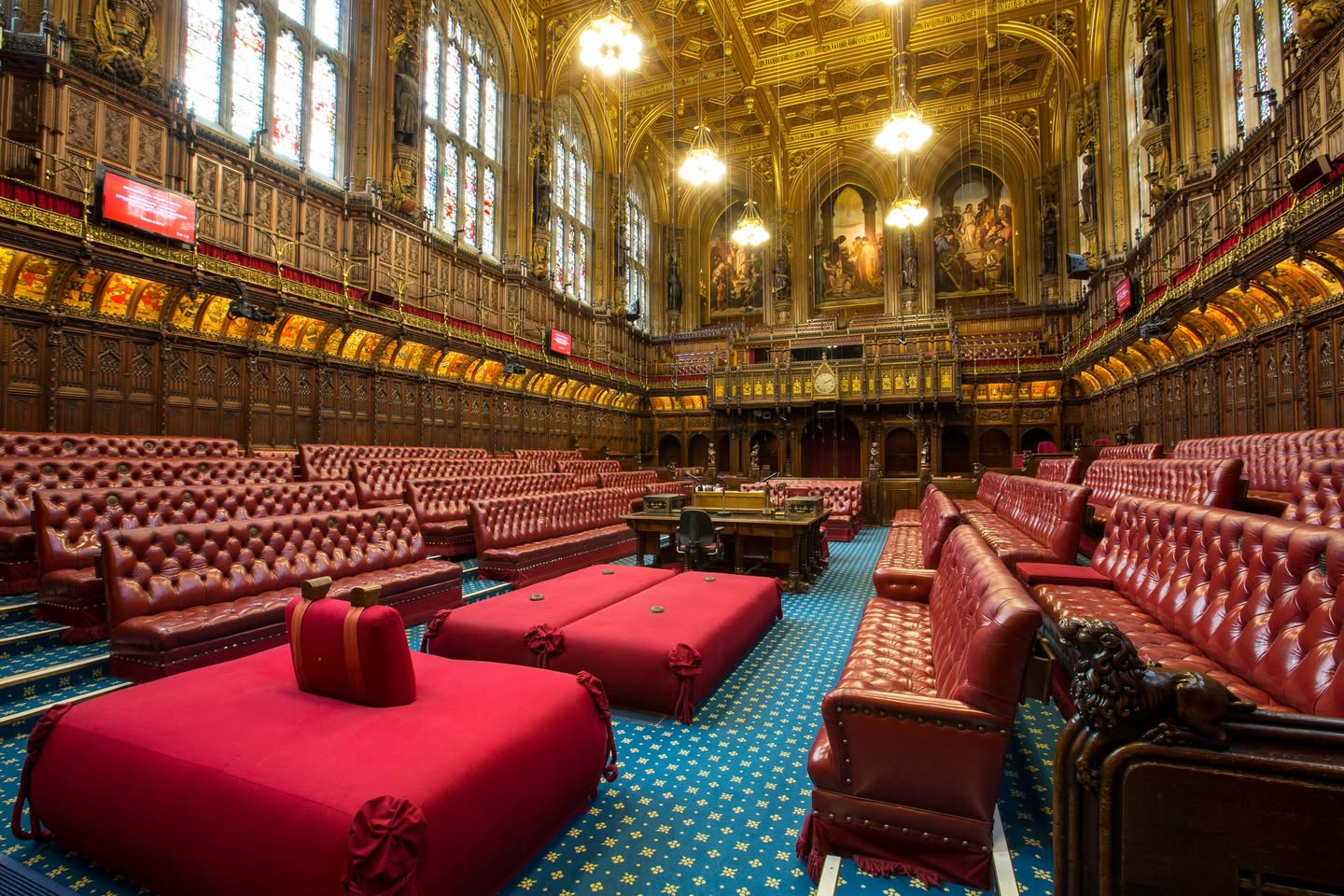
From the chamber
Focus
Areas of policy interest
- 01
Horticultural Sector Committee
- 02
Statutory Instruments (Joint Committee)
Parliamentary work
Record & activity
Live data from members-api.parliament.uk
and lordsvotes-api.parliament.uk.
Experience
Roles & appointments- 2024 — 2026Committee
Statutory Instruments (Joint Committee)
- 2023 — 2023Committee
Horticultural Sector Committee
- 2023 — 2024Committee
Statutory Instruments (Joint Committee)
Lords Votes
Voting record-
Financial Services and Markets Bill [HL]
Result: Agreed
188 Content 125 Not Content -
Financial Services and Markets Bill [HL]
Result: Agreed
196 Content 138 Not Content -
Financial Services and Markets Bill [HL]
Result: Agreed
194 Content 138 Not Content -
Financial Services and Markets Bill [HL]
Result: Agreed
226 Content 162 Not Content
Spoken Contributions
Speeches & debates- 09 Sept 2026Lords Chamber National Infrastructure Projects: Devolution
“My Lords, West Mercia has a police commissioner but no mayor. That area of Shropshire, Telford and Wrekin—where I used to be the leader—Herefordshire and Worcestershire is known as a devolution desert. What is the Government’s plan for that particular ar…”
“My Lords, West Mercia has a police commissioner but no mayor. That area of Shropshire, Telford and Wrekin—where I used to be the leader—Herefordshire and Worcestershire is known as a devolution desert. What is the Government’s plan for that particular area? Will we get a mayor or are we to carry on as we have for years?”
- 09 Sept 2026Lords Chamber Funeral Directors: Regulatory Regime
“My Lords, some communities prefer to have open-air funeral pyres. What is the Government’s policy on that?”
- 01 Sept 2026Lords Chamber Public Office (Accountability) Bill
“My Lords, it is a real honour to follow the noble Lord, Lord Carlile. What I want to say has mostly been said but, still, I shall continue. I support the Bill because it addresses one of the most important principles in public life: when a state is respo…”
“My Lords, it is a real honour to follow the noble Lord, Lord Carlile. What I want to say has mostly been said but, still, I shall continue. I support the Bill because it addresses one of the most important principles in public life: when a state is responsible for serving the public, it must also be accountable to the public. The lessons of Hillsborough are painful and profound. When things went wrong, institutions closed rank, information was withheld, responsibility was deflected, and bereaved families were left fighting for the truth. That is why I particularly welcome the Bill’s duty of candour. Public authorities and public officials should have nowhere to hide. They should be required to act with transparency, frankness and honesty, and to assist inquiries and investigations in finding the truth. The Bill provides criminal sanction for serious breaches, which I wholeheartedly support as well. This matters because accountability cannot simply mean blaming an institution after the event. There must be a responsibility for the individual who makes decisions or who withholds information. In my public life over the last 30 years, I have seen some incompetent people in charge of important decision-making where their first instinct is to protect themselves, hiding behind institutions and their departments. Most say that they are acting in the best public interest. I welcome that the Bill also challenges that culture. Of course, we must be careful when forming criminal law. The threshold must be high and nobody should face imprisonment merely for making an honest mistake. However, when there is serious wrongdoing, dishonesty or deliberate failure to uphold fundamental responsibilities, there must be consequences. I also strongly welcome the principle of parity of representation. This is about fairness. A bereaved family should not have to face a public authority equipped with lawyers and resources while the family struggles to obtain equivalent representation. The ordinary citizen, the little man or woman, must have a genuine opportunity to challenge the machinery of the state. The Post Office Horizon scandal demonstrated why the Bill is so urgently needed. Thousands of postmasters were wrongly accused of stealing money from the Post Office, while serious problems with the computer system were known about. Yet those postmasters were left to carry the blame. Windrush is another example. The independent review found that this was not simply bureaucratic bad luck but a profound institutional failure. The hostile environment in which this policy developed had devastating consequences for hundreds of law-abiding citizens—British citizens—many of whom had lived here since childhood. Some lost their job and their livelihood, and, in some cases, were wrongly removed from this country. What happened to them was reprehensible. I wish there had been such a law then to ensure that those responsible, including the Home Office of the day, could properly be held to account. Then there was the Covid-19 pandemic and the controversy surrounding public procurement, including the so-called VIP lane. Billions of pounds of public money were committed in extraordinary circumstances, and serious questions have subsequently been raised about value for money, transparency and accountability. I hope this Government will pursue every opportunity to recover public money where it was improperly spent. I hope the Bill will ensure that the power of the state is matched by an equal obligation to be accountable to the people it serves, rather than leaving families begging for information and truth. For those reasons, I strongly support the Bill and look forward to helping strengthen it as it proceeds through this House.”
- 09 Jul 2026Lords Chamber UK Migration
“I thank the Minister for that. I congratulate the Government on reducing net migration from, as the Minister said, its peak of 900,000 to 171,000, an impressive reduction of approximately 82%. However, despite this significant progress, a recent opinion…”
“I thank the Minister for that. I congratulate the Government on reducing net migration from, as the Minister said, its peak of 900,000 to 171,000, an impressive reduction of approximately 82%. However, despite this significant progress, a recent opinion poll suggests that almost half the public still believe that immigration is continuing to increase. This misconception is being exploited by the right-wing political parties and risks creating unnecessary division and disharmony within our communities. What more can the Government do to ensure that the public are made aware of the accurate immigration figures and are better informed about the progress that has been made?”
- 09 Jul 2026Lords Chamber UK Migration
“To ask His Majesty’s Government what assessment they have made of the number of people migrating into the UK in each of the last five years.”
- 08 Jul 2026Lords Chamber Police Leadership Commission Report
“My Lords, I read this report from cover to cover. It acknowledges that ethnic-minority officers have a poorer retention rate and slower progression because they continue to face discrimination within their organisation. Some 20 years ago, when I was on t…”
“My Lords, I read this report from cover to cover. It acknowledges that ethnic-minority officers have a poorer retention rate and slower progression because they continue to face discrimination within their organisation. Some 20 years ago, when I was on the West Mercia Police Authority as a councillor, I raised this issue constantly, yet here we are and ethnic-minority officers are still leaving at a far higher rate than white officers. This report acknowledges this issue, yet it offers no tangible or practical solution to this problem. Does my noble friend agree?”
Written Questions
Questions to government- Home Office
To ask His Majesty's Government what assessment they have made of the impact on the care system, care employers, and immigrant care workers of the loss of employers’ visa sponsorship licences; and what advice they give to care workers whose employers have lost their visa sponsorship licence and cannot, therefore, sponsor the renewal of their visa.
Lord Sharpe of Epsom
Home OfficeAny decision to revoke a sponsor’s licence will only be done in circumstances where a sponsor has failed to meet the obligations and duties of being a sponsor such as ensuring workers are being paid the correct salary and given guaranteed work. Even then, this will only be where other action, such as an action plan to improve processes and compliance, would not be appropriate.
Displaced migrant workers are able to seek alternative employment providing they have a job offer from a Home Office approved sponsor and make a new application.
- Department for Levelling Up, Housing and Communities
To ask His Majesty's Government what steps they are taking to protect the provision of Gurdwaras in Hounslow; and what assessment they have made of the impact on the Gurdwara in Alice Way, Hounslow, of the proposed sale of land owned by the Department for Education that is situated next to it.
Baroness Swinburne
Department for Levelling Up, Housing and CommunitiesIt has not proved possible to respond to this question in the time available before Prorogation. Ministers will correspond directly with the Member.
- Department for Business and Trade
To ask His Majesty's Government what steps are being taken to promote free movement for lawyers between England and Wales and India, including steps (1) to make visas easier to obtain, and (2) to streamline processes relating to qualifications.
Lord Johnson of Lainston
Department for Business and TradeThe ongoing UK-India trade negotiations present an opportunity to facilitate legal services trade which is a key professional and business services sector contributing to over £34bn to the UK economy in 2022.
Whilst I am unable to disclose details of live negotiations, as part of extensive stakeholder engagement we know that UK businesses struggle with barriers to services trade, including legal services. Stakeholder input helped to inform our negotiation objectives, which can be found on gov.uk.
Outside negotiations, the UK Ministry of Justice is closely engaged with Indian counterparts on shared interests, including India's new legal services regulations, through existing fora.
Register of Interests
Declared interestsCategory 1 Shareholdings etc. (a)
- Kuldip Sahota Production Ltd (film production)
Committees
Committee memberships- Former member
Statutory Instruments (Joint Committee)
2024 — 2026
- Former member
Horticultural Sector Committee
2023 — 2023
- Former member
Statutory Instruments (Joint Committee)
2023 — 2024
APPG Roles
All-Party Parliamentary Group memberships- Officer
All-Party Parliamentary Group on Customer Service
Get in touch
- Phone+44 (0)20 7219 5353
- Email[email protected]
- AddressHouse of Lords, London,
SW1A 0PW, United Kingdom